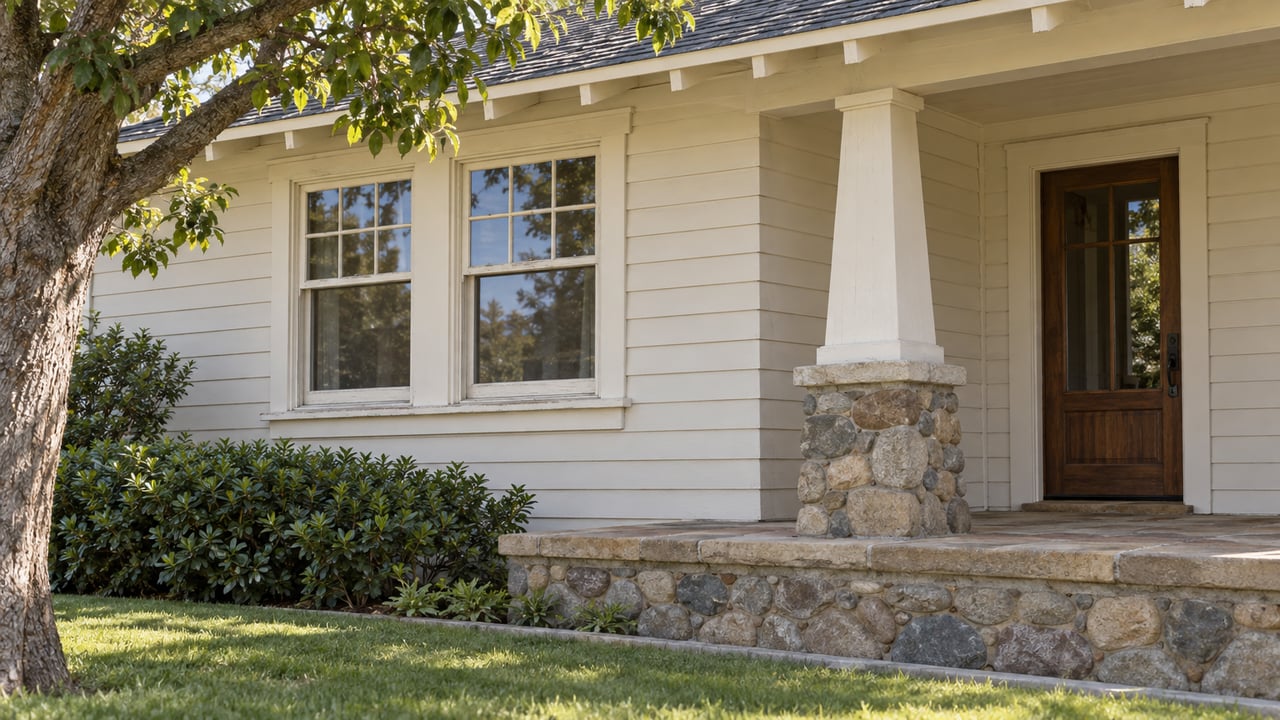
Sierra Madre's Historic Review Runs on a Calendar, Not a Landmark List
October 1, 2026
October 1, 2026
In 2018, a historian from Sapphos Environmental spent a March morning walking the grounds at 935 and 965 E. Grand View Avenue in Sierra Madre, photographing the buildings, checking permit records at City Hall, and cross-referencing old Sanborn fire insurance maps. The properties held one house at 935 and three smaller residences plus two gazebos at 965, unremarkable buildings by any ordinary reading. Neither address sat inside a historic district. Neither had ever been proposed for landmark status. The evaluation still had to happen, and it had to happen before any building permit could move forward. The reason had nothing to do with architecture. It came down to arithmetic: both properties were more than 75 years old on the date someone applied to work on them.
That's the mechanism worth understanding if you own, or are about to own, an older house in Sierra Madre. The city's historic review process doesn't ask whether your house is beautiful, rare, or locally significant. It asks how old it is on the day you file for a permit.
Sierra Madre Municipal Code section 17.22.140 sets the rule plainly: any property with a year-built date more than 75 years before a building permit application is received needs a written Historic Resource Evaluation before that permit can proceed. The city's own guidance tells owners to check their year built through the Los Angeles County Assessor Portal before they plan anything.
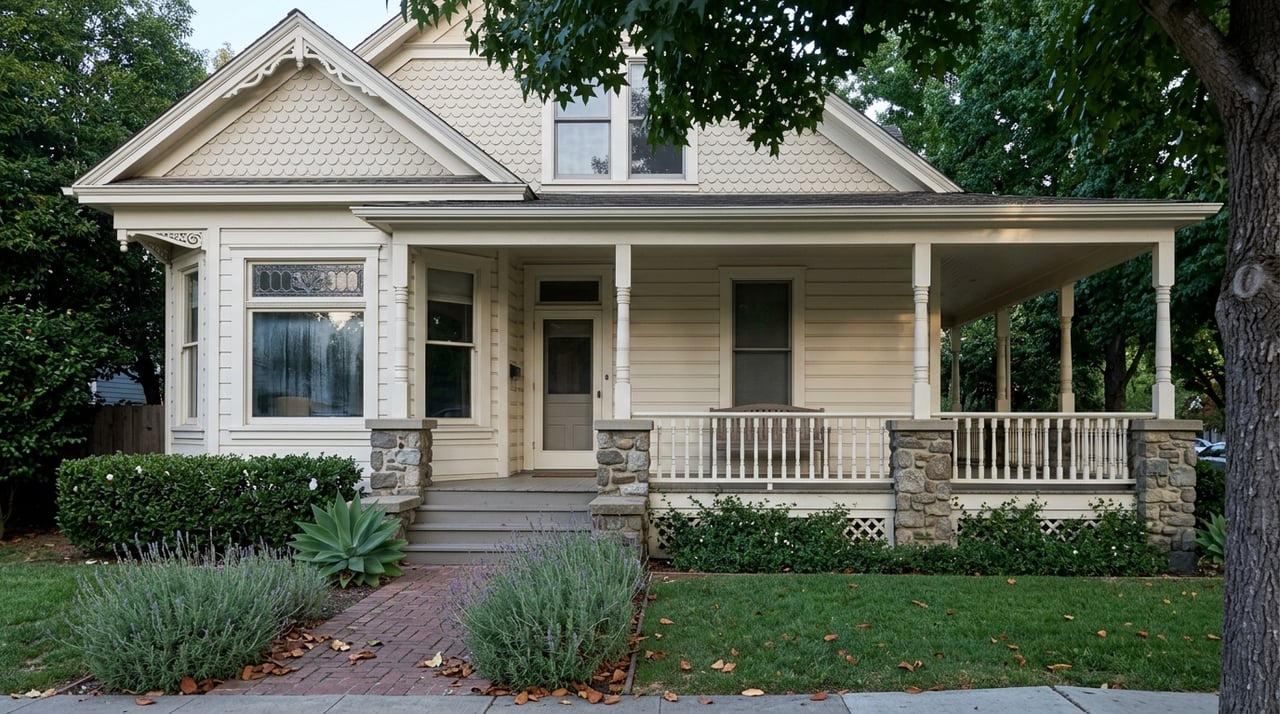
Because the town was laid out in the 1880s, a large share of its housing stock already sits on the wrong side of that line. A Craftsman bungalow from 1908 crosses it. So does a plain postwar house from the early 1950s. The ordinance doesn't distinguish between them at the intake stage. Age alone opens the file.
The threshold also moves. It isn't pegged to a fixed year, it's pegged to the calendar date of the application. A house built in 1952 sits outside the rule this year and inside it in 2027. Every January 1st quietly expands the population of Sierra Madre houses subject to this review, without a single vote, hearing, or landmark nomination.
| Permit application filed in | Houses that cross the 75-year line |
|---|---|
| 2026 | Built in 1951 or earlier |
| 2027 | Built in 1952 or earlier |
| 2028 | Built in 1953 or earlier |
If you're weighing a purchase in Sierra Madre and the house you like was built in 1952, the seller's disclosures today may say nothing about historic review because the house isn't old enough yet. It will be, soon, and the rule that applies to your future addition or reroof depends on the date you file, not the date you bought.
The evaluation itself isn't a design opinion. It's a formal determination, written up on California Department of Parks and Recreation Series 523 forms, that assigns the property a status code. A code of 6 means the house is not eligible for the National Register, the California Register, or local landmark designation, and the project proceeds under ordinary review. That's what happened at 935 and 965 E. Grand View. Codes 1 through 5 mean the opposite: the property is found eligible, and the project moves into a Historic Resource Design Review, prepared by a historian who meets the Secretary of the Interior's Professional Qualification Standards and who is selected by the city, not the homeowner.
A code of 7, insufficient information, sends the file back for more research rather than closing it out. None of these outcomes are guesses. They follow from a documented survey, and they take time and a consultant's fee to produce, on top of whatever the underlying renovation was already going to cost.
Here's the part that runs against instinct. Owning a designated historic landmark in Sierra Madre sounds like it should mean more oversight, not less. In practice, it means one fewer step.
For a property that's already on the city's list of designated landmarks, the Historic Resource Evaluation is skipped entirely. The project goes straight to Historic Resource Design Review, because the eligibility question has already been settled. The city's current landmarks list, revised in July 2024, names the houses that carry that certainty: the Emile Deutsch House and Cigar Factory from 1885, the Norris House from 1884, the Hawks and Copps Building from 1887, the J. Gamble Carson House from 1914, the C.J. Pegler House from 1906, the Dupre-Nash House from 1918, the William Deutsch House from 1883, the Karl Graf House known as the Austrian Vacation Villa from the 1920s, a Craftsman Bungalow at 169 N. Baldwin Avenue from 1908, and a Spanish Colonial Revival at 585 W. Grand View Avenue from 1927, among others.
An unlisted house that has simply aged past 75 carries the opposite position. Nobody has yet answered whether it's eligible, so that question has to be resolved from scratch, at the owner's cost, before any permit clears. The house at 935 E. Grand View wasn't penalized for being old. It was required to prove, through a paid survey, that it wasn't historically significant before its owner could get a routine permit approved. A landmark never has to make that case. It already made it, years earlier, when it was designated.
Sierra Madre's accessory dwelling unit rules have moved twice in 2026, and both changes touch older properties in different ways.
On May 26, 2026, the City Council adopted Ordinance No. 1494, which narrowed the owner-occupancy requirement for junior ADUs to cases where the JADU shares sanitation facilities with the main house. That change tracks Assembly Bill 1154, which took effect January 1, 2026, and amended state law to the same narrower standard. Give a junior ADU its own bathroom, and the owner-occupancy requirement no longer applies.
Separately, a new ADU fee structure took effect July 1, 2026. Units of 750 square feet of interior livable space or less owe nothing under the impact fee schedule. Above that line, the fee is calculated as a proportional share of a $76,393.44 base amount, discounted 75% for a homeowner's first ADU.
Neither change touches the 75-year rule directly, but the overlap matters for anyone planning a unit on an older lot. A detached ADU that leaves the main house untouched generally sidesteps the historic evaluation trigger altogether, since the rule applies specifically where a project alters or demolishes a structure that qualifies as a preservation candidate. A project that converts space inside the main house, or that requires demolishing part of it to make room, runs straight into the same evaluation as any other permit on a 75-year-old building. The distinction is the project scope, not the ADU designation.
Older Sierra Madre lots frequently carry mature oak, sycamore, or black walnut trees, and all three are protected species under the city's tree preservation code. Any construction taking place under one of these canopies requires an Arborist Report identifying trunk locations, drip lines, species, and diameter before work can proceed. It's a separate process from the historic evaluation, but on a century-old lot with a legacy oak in the side yard, the two reviews tend to show up in the same renovation timeline.
A few checks take less than an hour and change what you should expect from escrow:
Does an eligible finding mean my renovation gets blocked? No. It means the project moves into a Historic Resource Design Review rather than standard plan check, which adds a review layer but doesn't stop most projects outright.
Does adding a detached ADU trigger the historic evaluation on its own? Only if the project alters or demolishes a structure that qualifies as a preservation candidate. A new, separate unit that leaves the existing house untouched generally doesn't pull in the same review.
How do I find out if my house has already crossed the 75-year line? Check the year built through the LA County Assessor Portal and compare it against the date you expect to file for a permit, not the date you're reading this.
If you're weighing a purchase, a renovation, or a sale of an older Sierra Madre home and want a clear read on what the timeline actually looks like before you write an offer or set a list price, Kate Amsbry can help you sort out what applies to your specific address and what doesn't.
Stay up to date on the latest real estate trends.

Whether you’re mapping out a long-term plan or need to list next month, We're here to listen first, advise second, and guide every step until the ink is dry. Let’s connect—and turn your Pasadena dreams into a solid address.