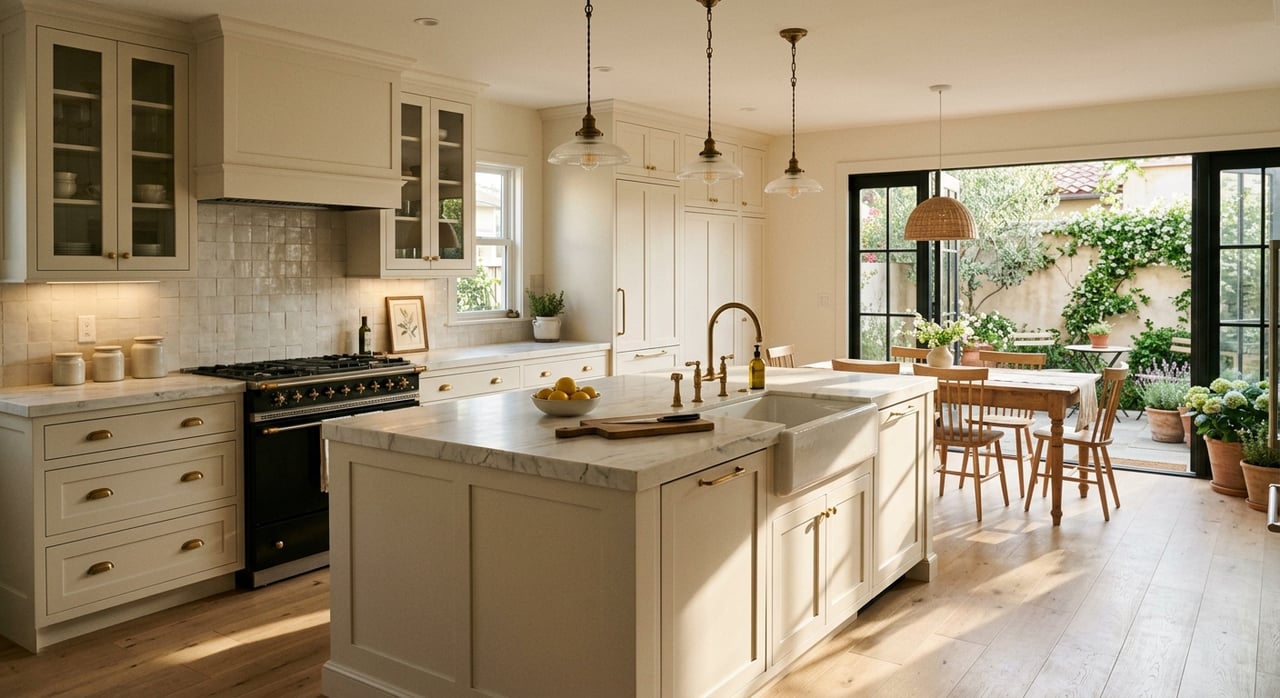
Pasadena Move-Up Buyers: Planning Your Next Home
May 14, 2026
May 14, 2026
If your first Pasadena home no longer fits the way you live, you are not alone. Many owners who started in a condo or smaller house are now asking whether it makes sense to move into a home that can serve them for the next decade or longer. The good news is that a move-up plan can work well here, but only if you look at pricing, monthly costs, timing, and neighborhood trade-offs together. Let’s dive in.
Pasadena is still a high-price market, but it is not moving at the same speed in every area or price range. March 2026 data from Redfin shows a median sale price of about $1.253 million, 32 median days on market, a 103.0% sale-to-list ratio, and an average of 4 offers per home. Realtor.com reported a similar median sold price in April 2026, along with 398 active listings and 40 median days on market.
What that means for you is simple: you may have options, but you still need a clear plan. Some homes draw intense competition, while others move at a more measured pace. If you are trying to sell one property and buy another at the same time, those differences matter.
Pasadena also has a wide range of price points within the city itself. Realtor.com’s April 2026 neighborhood data shows median listing prices around $763,500 in South Lake, about $799,999 in the Playhouse District, around $899,000 in Downtown Pasadena, roughly $1.30 million in Northwest and Northeast Pasadena, and about $1.499 million in West Pasadena. That spread helps explain why moving from a starter home to a forever home can feel exciting and daunting at the same time.
When homeowners think about moving up, they often focus first on equity. Equity matters, but it is only part of the picture. The California Department of Real Estate advises buyers to plan for a down payment of about 5% to 20% plus another 3% to 7% of the purchase price in closing costs.
You also need to account for the costs that continue after closing. The same DRE guidance notes that buyers should consider HOA dues, special taxes, assessments, and other carrying costs. In Pasadena, where the Census reports median monthly owner costs with a mortgage at $3,627, your monthly payment deserves just as much attention as your target price.
Mortgage rates are also shaping the math. Freddie Mac reported the average 30-year fixed mortgage rate at 6.37% on May 7, 2026. If you bought your current home years ago, your existing rate may be much lower, so your next payment can rise faster than expected even if your equity position looks strong.
Before you tour homes, build a cash plan that includes:
That last point matters. A forever home often comes with projects, furnishing costs, or delayed maintenance needs. You want enough flexibility to enjoy the move, not just survive it.
A lot of move-up sellers focus on what they will make and forget to model what they will pay. In Pasadena, transfer taxes affect your net proceeds.
The City of Pasadena fee schedule lists a real property transfer tax of $0.55 per $500 of value. Los Angeles County also applies a documentary transfer tax of $1.10 per $1,000 on taxable conveyances, with any applicable city tax added on top. These costs may not make or break your move, but they absolutely belong in your numbers from day one.
There is no single number that works for every homeowner. A better question is whether your current equity can cover your sale costs, your down payment, your purchase closing costs, and still leave you with a payment that feels comfortable.
Pasadena’s owner-occupied median home value is $1,093,300 according to Census QuickFacts, and the city’s owner-occupied rate is 42.5%. That suggests many owners may have meaningful equity, but your actual position depends on when you bought, how much you still owe, and whether you have improved the property over time.
In practical terms, your move-up window is strongest when you can answer yes to three questions:
If the answer to any of those is shaky, the right next step may be planning, not rushing.
This is one of the biggest questions for Pasadena move-up buyers. The best answer depends on your equity, your financing, and how competitive your target area is.
California contracts usually move quickly. The California Department of Real Estate notes that a standard offer often gives the buyer 3 days to get the deposit to escrow, 7 days to complete the loan application and provide verification of funds, and 17 days to complete inspections and investigations. Sellers typically have 7 days to provide disclosures, and contingency removals must be in writing.
The DRE also notes that buyers who need to sell another property can use a COP contingency form, and sellers who need to find a replacement property can counter with a similar contingency structure. That means contingent moves are possible, but they work best when the terms are realistic and the paperwork is clean.
Selling first can reduce pressure if you need your current equity for the next down payment. It also gives you a firmer budget because you know your proceeds before you write offers.
The trade-off is that you may need temporary housing or a rent-back strategy if your next home is not lined up yet. In a market like Pasadena, that can still be the most comfortable path for owners who want certainty.
Buying first can be attractive if you have enough available cash or financing flexibility to make the purchase before your current sale closes. This can help you avoid a rushed move and gives you time to prepare your existing home for market.
The risk is carrying two homes for a period of time. In a city where monthly payment sensitivity matters, that overlap needs careful planning.
A contingent offer can be useful when you need your current home to sell before the next purchase fully makes sense. In a competitive market, though, contingent offers are usually strongest when paired with strong pre-approval, clear proof of funds, and realistic timing.
Because Pasadena can feel more competitive in some pockets than others, this choice often depends on the specific neighborhood and price band you are targeting. A calm, data-driven plan is usually more effective than trying to force one solution onto every property search.
A forever home is not only about square footage. It is also about how you want to live day to day.
Pasadena’s General Plan says higher-density development is directed away from residential neighborhoods and into the Central District, Transit Villages, and Neighborhood Villages. The plan also emphasizes historic preservation, better circulation without cars, and improved trail and open-space connectivity.
For you, that means different parts of Pasadena can offer very different living patterns. Some areas may feel more convenient and urban. Others may offer a more residential setting, larger lots, or a quieter feel.
As you move from a starter home to a long-term home, think about:
The right answer is personal. The goal is to find the best long-term fit for your routine, budget, and plans.
Pasadena’s architectural character is one of the city’s biggest draws. It can also shape what you are allowed to change later.
The city’s historic preservation documents explain that properties in landmark and historic districts are reviewed using design guidelines based on the Secretary of the Interior’s Standards for Rehabilitation. Pasadena also maintains context reports covering local architectural themes, including Arts & Crafts, bungalow courts, and period revival styles.
If you want a home you can expand, rework, or modernize substantially, check historic status early. Preservation review can affect exterior alterations and additions, so it is important to understand those limits before you count on a future remodel.
If school assignment is part of your decision, do not rely on neighborhood name alone. Pasadena Unified School District directs families to use its School Finder and address-based residence zone maps to verify the assigned neighborhood school.
That matters because school fit is address-specific. If this factor is important to your move, verify it early in your search so it becomes part of your decision process rather than a last-minute surprise.
For some move-up buyers, Proposition 19 can change the timing conversation in a meaningful way. According to Los Angeles County’s Prop. 19 calculator and the California Board of Equalization, eligible homeowners who are 55 or older, severely disabled, or victims of a qualifying disaster may be able to transfer the taxable value of a primary residence to a replacement primary residence anywhere in California, as long as the replacement is purchased or newly constructed within two years of the original sale.
There is an important timing detail, though. If the replacement home is bought before the original home is sold, the replacement property is taxed at full market value until the original sale closes, and there is no refund for that period. The claim is filed after both transactions are complete and after you are living in the replacement home.
For eligible homeowners, that means timing is not just about convenience. It can affect your property tax outcome too.
Moving up in Pasadena is rarely just a bigger-home decision. It is a budgeting decision, a timing decision, and a lifestyle decision all at once.
When you look carefully at your equity, your monthly payment, your target neighborhoods, and your long-term plans, the path usually becomes clearer. The goal is not just to buy more house. It is to make a move that still feels right years from now.
If you are weighing whether now is the right time to move from a starter home to a forever home in Pasadena, Kate Amsbry can help you map out a thoughtful, concierge-level plan with local insight at every step.
Stay up to date on the latest real estate trends.

Whether you’re mapping out a long-term plan or need to list next month, We're here to listen first, advise second, and guide every step until the ink is dry. Let’s connect—and turn your Pasadena dreams into a solid address.